












Wholesale floor tiles from Turkish factories
Turkish floor tile ships out of the ceramic belt around Kütahya, Bilecik and Eskişehir — the same high-capacity plants that supply glazed ceramic and porcelain across Europe. For an importer that means one sourcing route for the whole floor programme: glazed ceramic where the budget leads, porcelain where the traffic demands it, produced fresh against your order in one shade batch.
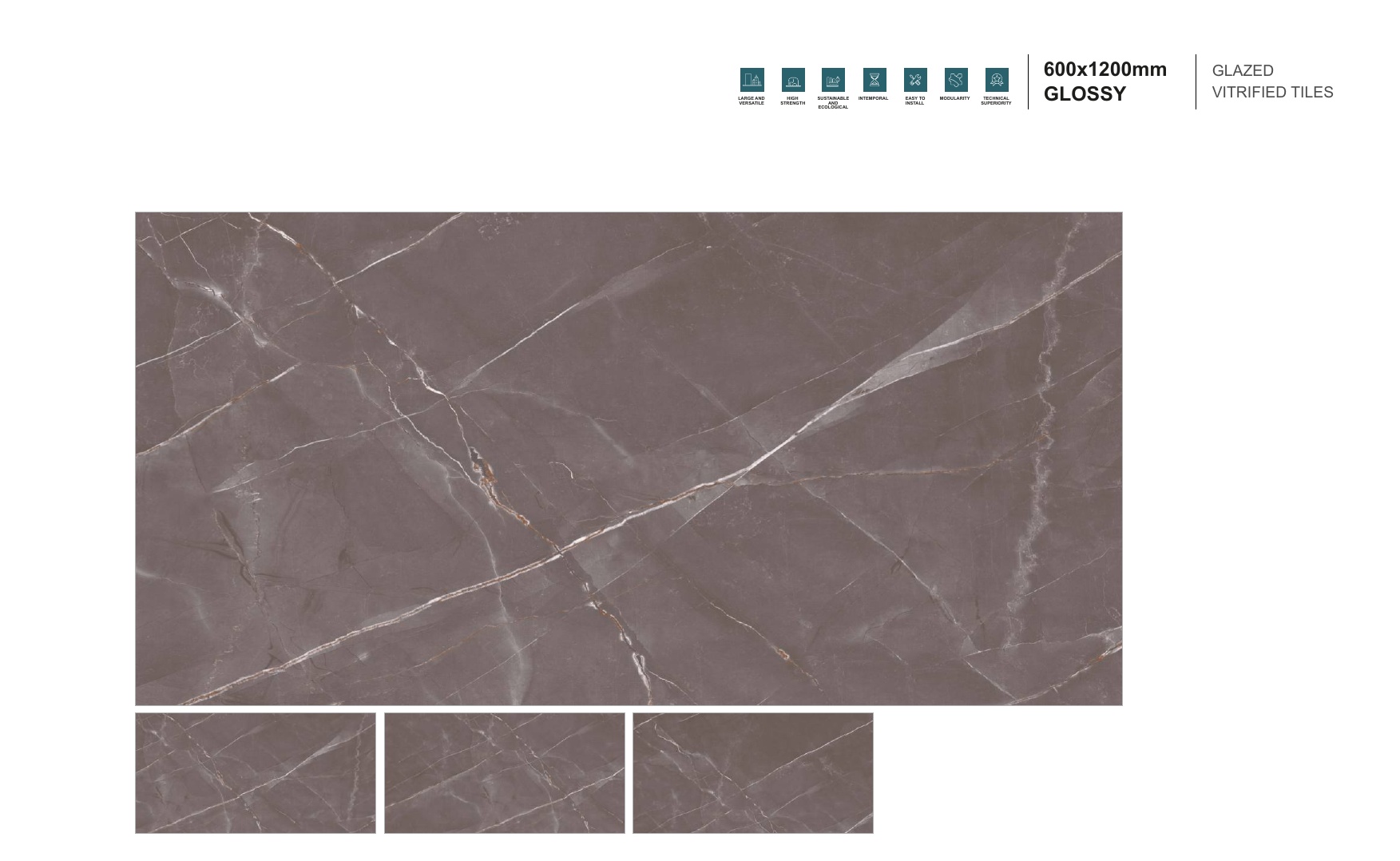
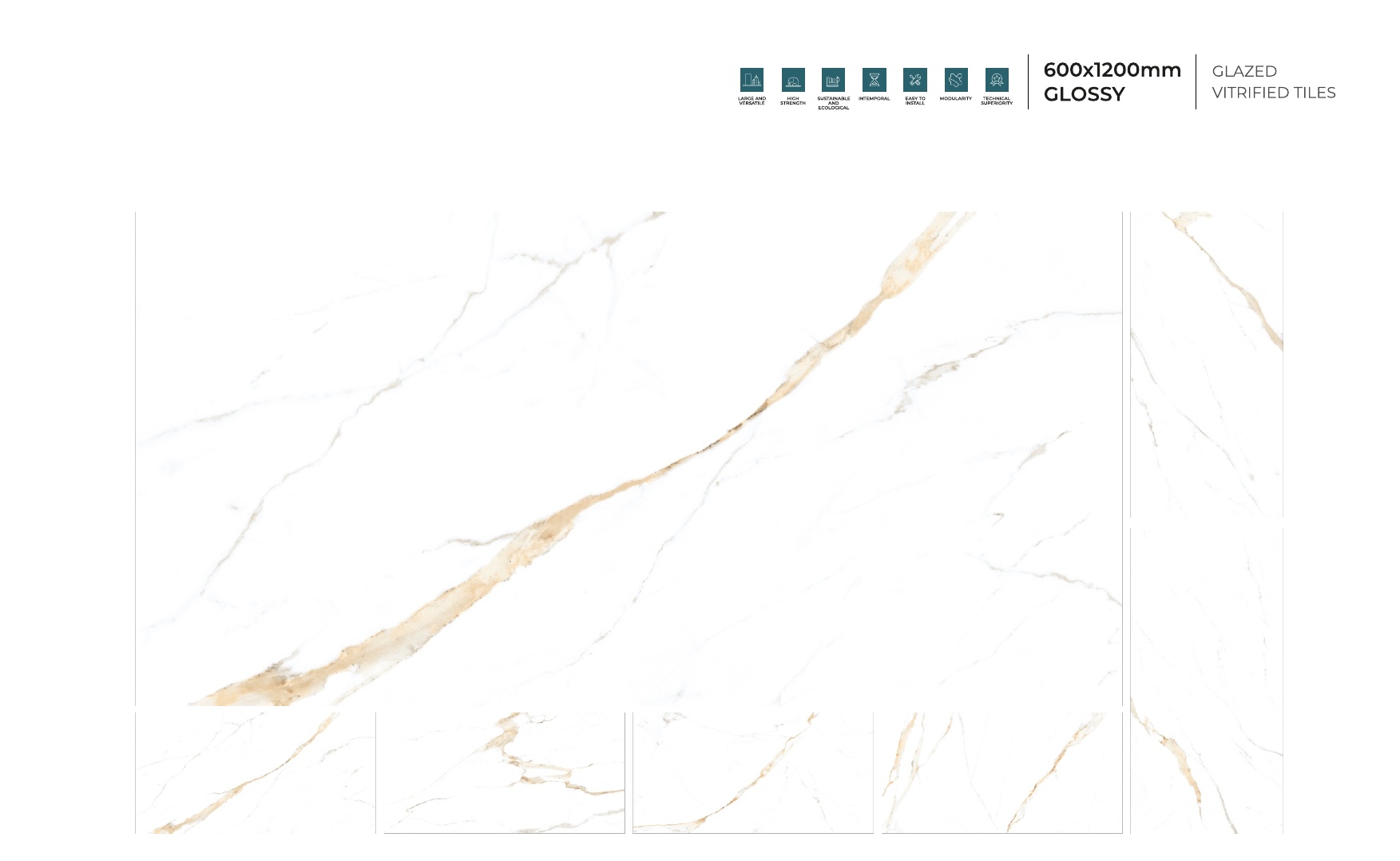
The export workhorses are 60×60, 45×45 and 60×120, in matt, polished and structured anti-slip surfaces. For commercial floors fix the slip class (R9–R11) and a 10–12 mm body in the order; for residential programmes 8–9 mm glazed ceramic keeps the container cost down.
Specifying a floor tile order
| Parameter | Why it matters |
|---|---|
| Body (glazed ceramic / porcelain) | Porcelain: absorption ≤ 0.5%, frost-proof; ceramic costs less for dry interiors |
| Slip class (R9–R13) | Contractual requirement on commercial and public floors |
| Rectified vs cushion edge | Rectified lays at 2 mm joints — large-format look |
| Shade & calibre codes | One kiln batch = one code set; order the full quantity at once |
Container maths and how to order
A 20ft container carries 23–26 tonnes — roughly 1,000–1,200 m² of 9 mm glazed floor tile or 850–950 m² of 10 mm porcelain in 60×60. Floor, wall and trim pieces for one project are consolidated at the factory into a single load to the USA or Europe, with CE marking and ISO 13006 classification.
Send formats, square metres and destination port through the quote form and we come back within 24 hours with ex-works or CIF/FOB pricing, production samples couriered before the run.